


Welcome to another issue of apartamento 710, a newsletter about living a creative life. If you are new here, I invite you to explore my interview series, Sobremesa, my section Reference Library, or a fan’s favorite:

Dear reader,
After a few days in Toronto, I am back in Vancouver, where it feels like Spring compared to the -25°C weather I experienced in the past few days. My visit was short but eventful. I was originally there for a work event, but managed to squeeze in a couple of extra days to get to know the city. I even hosted a mini apartamento 710 meetup, which was one of the highlights of my trip. I was reluctant and honestly a bit scared about spending time in Toronto in the middle of winter, but I truly had the best time thanks to my local friends who took the time to show me some of their favorite spots. Some of my highlights: Tusk, The Paper Place, Kensei Bar and Rooms. Can’t wait to be back.
In today’s letter, I’m sharing my experience with keeping a rejection log and how it has slowly reshaped my creative practice and how I think about failure. I was introduced to this idea by my friend, artist Valeria Bueno, when I interviewed her last year for Sobremesa.
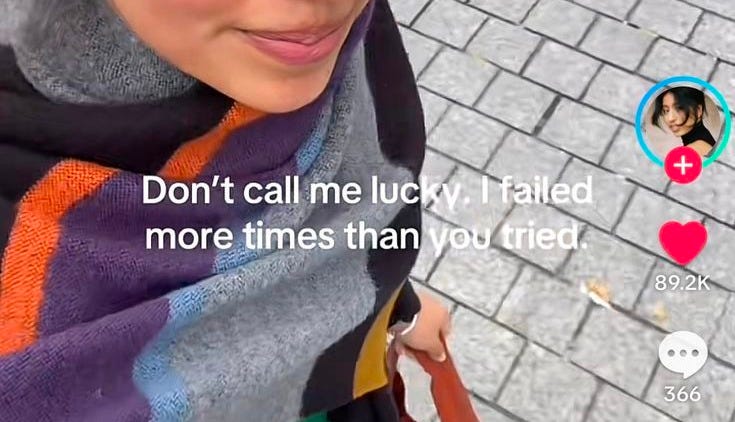
I was curious about what might happen if I started reframing every no as an opportunity, instead of something to hide or feel ashamed of. Over time, looking back at my rejection log has made me feel proud—not because I always succeeded, but because I tried. In my world, pursuing what you want already makes you a winner.
What a rejection log is (and isn’t)
A rejection log is exactly what it sounds like: a running list of rejections that you keep somewhere accessible. It can live in your Notes app, a spreadsheet, a journal, Notion, or wherever you already tend to return to.
What it is: a record of courage ⭐ A way to track your attempts, perseverance, and your willingness to take risks in pursuit of your dreams.
What it isn’t: a list of failures, or something meant to shame or discourage you.
Writing down your entries doesn’t need to take long. Here’s what I usually include:
Date
What I tried (submitting an application for an exhibition or reaching out for a collab)
What I learned or any feedback shared
What I would do differently next time, a new approach I would like to take (like instead of sending an email, showing up in person, or trying a new cold email style)
In the spirit of removing shame out of our failures, here are some of the rejections I experienced in the past year:
I submitted my illustration work to three group exhibitions. Two rejected me, and one ghosted me.
I reached out to one of my favorite painters for a Sobremesa interview, and they said no (but told me to reach out again in the Spring).
I pitched a partnership collab with one of my favorite brands and had no response.
If you are interested in starting your own rejection log, I am sharing template I use below, available for download.

This practice takes off the weight of a rejection. It doesn’t mean that rejection won’t hurt me, but keeping track of it helps me to stay grounded, focused, and honest with myself. Whenever I start feeling that nothing is happening, I ask myself: how many times have you tried? How many times did you share your work this week? Rejection is a muscle; it is an indicator that you are really betting on your dreams.

